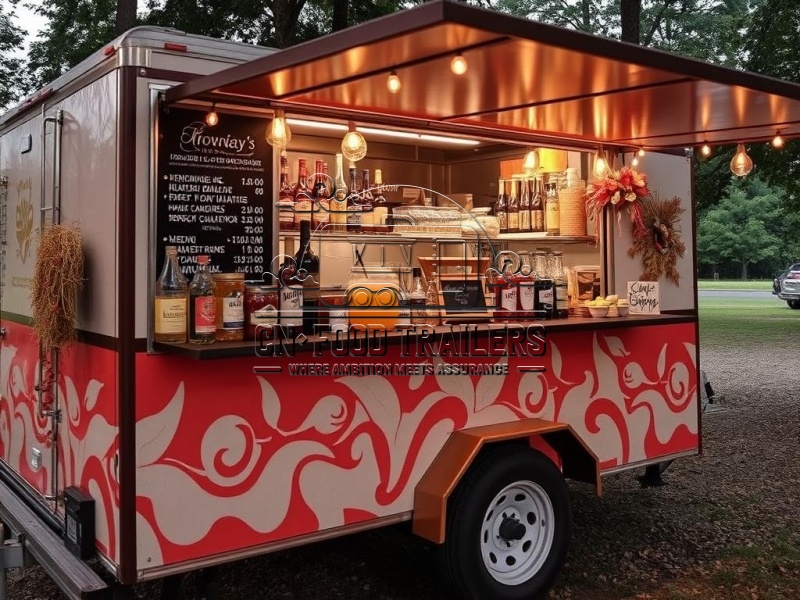
A cleverly designed and fully functional drink food trailer is becoming a “traffic magnet” for city streets, shopping plazas, music festivals, and even community events. It not only breaks the fixed space limitations of traditional catering but also redefines the modern consumer experience with its flexible operating model and personalized scene adaptation capabilities.
Key Features
1.Modular Design, Flexible Adaptation to Diverse Scenarios
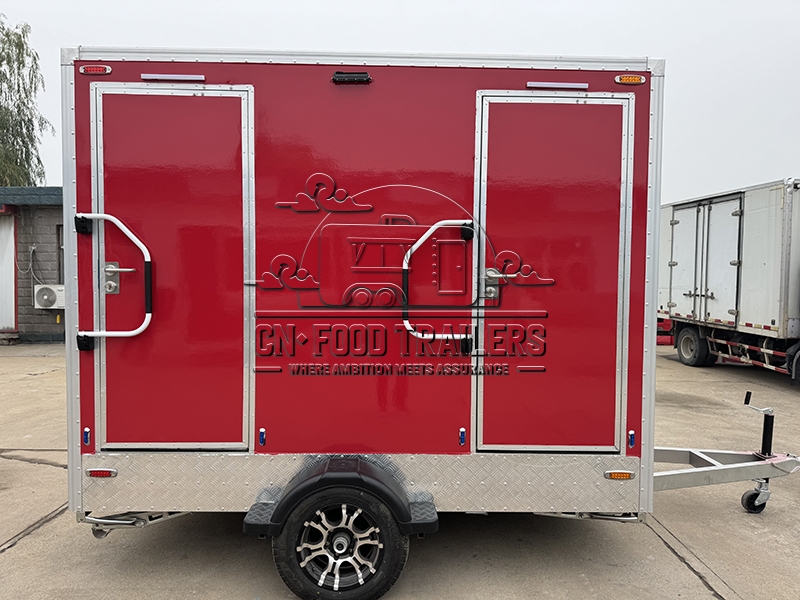
Mobile beverage trucks typically employ a towable or through-type structure, with lengths ranging from 4 to 10 meters, allowing for customized internal layouts. For example, a 16-foot lemonade truck utilizes a modular design, independently dividing the operation area, storage area, and display area, ensuring smooth operation while maximizing space utilization. Its dual torsion axles and 5000-pound load-bearing capacity easily handle complex terrains, operating stably from city streets to suburban meadows.
2.Highly Recognizable Appearance, Inherently Promotes Brand Image
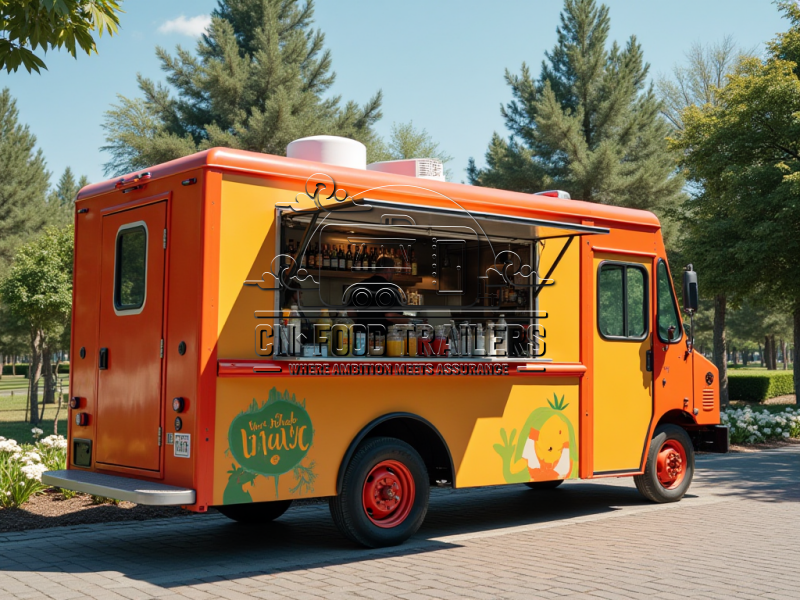
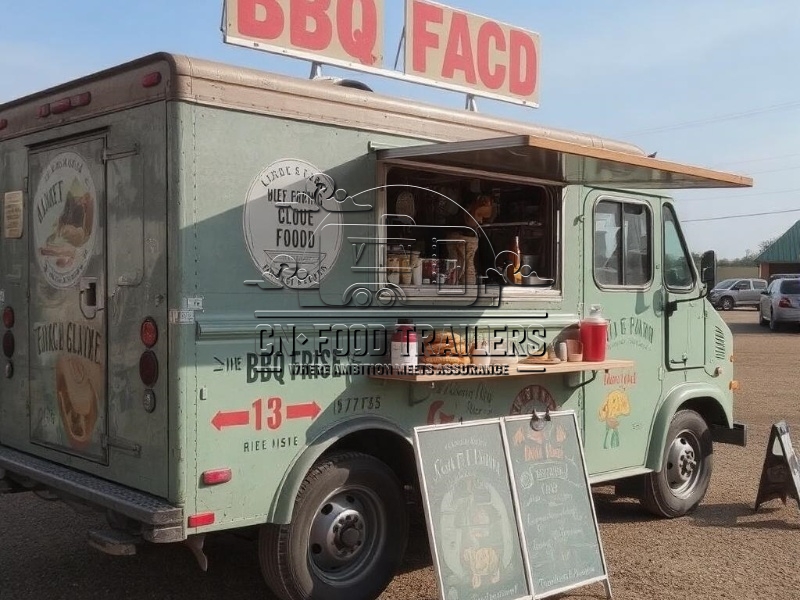
The trucks feature bright paint, neon lights, or brand IP designs, combined with openable display windows and LED advertising screens, creating a “mobile billboard” effect. For instance, a milk tea brand’s truck, predominantly pink and adorned with giant milk tea cup decorations, attracted over 2000 visitors daily at music festivals, generating over 100,000 social media impressions.
3.Integration of Environmental Protection and Energy-Saving Technologies
Modern food trucks generally utilize solar panel power systems combined with lithium battery energy storage devices to meet basic energy needs such as refrigeration and lighting. Some high-end models are also equipped with intelligent temperature control systems, using the Internet of Things to monitor equipment operation status in real time and reduce energy consumption. For example, one coffee truck uses AI algorithms to optimize the collaborative operation of the ice maker and coffee machine, reducing daily energy consumption by 30% compared to traditional equipment.
Internal Equipment
1.Cold Chain System: The “Lifeline” of Beverage Quality
- Multi-Temperature Zone Refrigerated Display Cases: Supports dual-temperature zone storage of 0-4℃ refrigeration (freshly squeezed juice) and -18℃ freezing (ice cream ingredients), with capacities ranging from 200L to 1000L.
- Ice Maker: Daily ice production capacity can reach 50kg-200kg, meeting peak demand.
- Rapid-Cooling Display Case: Employs frost-free air-cooling technology to ensure beverages maintain optimal taste during display.
2.Beverage Preparation Equipment: A Balance of Professionalism and Intelligence
- Coffee Machines: Supports multiple modes including espresso, Americano, and latte. Some models feature an automatic milk frothing system, reducing brewing time to 30 seconds per cup.
- Juicers: Utilize low-speed cold-press technology to maximize fruit nutrient retention, increasing juice yield by 20% compared to traditional models.
- Intelligent Sealing Machine: Automatically seals cups using infrared sensors, supporting customized printing for enhanced brand recognition.
3.Cleaning and Hygiene System: Meets HACCP Standards
- Three-Tank Washing Station: Equipped with a 15-inch deep water tank, supporting simultaneous washing, disinfection, and rinsing.
- Wastewater Treatment System: A closed-loop system consisting of a 55-gallon grey water tank and a 42-gallon fresh water tank, meeting the washing needs of 200 beverages per day.
- UV Disinfection Lamps: Regularly sterilizes work surfaces to ensure food safety.
4.Power and Lighting Systems: 24/7 Operational Support
- 100A Power Package: Supports dual 240V/120V output, allowing simultaneous operation of coffee machines, ice makers, lighting, and other equipment.
- LED Ambient Lighting: Adjust color temperature and brightness via a mobile app to create differentiated consumption scenarios.
- 50A Transfer Switch: Ensures seamless power supply during transitions between mains and generator power, preventing equipment downtime.
Application Areas
1.Urban Street Economy: Low-Cost Startup Choice
In first-tier cities with high rents, mobile beverage and food trucks have become the preferred choice for entrepreneurs due to their “low investment, high return” model. For example, a popular lemon tea truck in Shanghai achieved a peak daily turnover of 8,000 yuan, a gross profit margin exceeding 65%, and a 6-month payback period far lower than traditional stores.
2.Commercial Complex Traffic Generation: Creating Immersive Experiences
Shopping malls introduce specialty beverage and food trucks, forming a complementary business model of “fixed shops + mobile stalls.” For example, a shopping mall in Chengdu set up a “retro coffee truck” in its atrium, combining it with AR interactive games, which increased customer dwell time by 40% and boosted sales of surrounding shops by 25%.
3.Customized Services for Large-Scale Events: A New Battleground for Brand Marketing
In music festivals, sporting events, and other similar settings, food trucks can be quickly deployed as “brand pop-up stores.” For instance, a beer brand launched a “mobile beer garden” during the World Cup, providing cold-chain craft beer from a food truck, coupled with live streaming on large screens and interactive games, selling over 5,000 beers in a single event.
4.Community Service Innovation: Combining Convenience and Public Welfare
Some cities have transformed food trucks into “mobile convenience service stations,” offering affordable coffee and breakfast during morning rush hours and transforming them into “public welfare book corners” in the evenings. A portion of the proceeds from beverage sales is donated to community funds, achieving a win-win situation for both commercial and social value.